

Close Menu
    Facebook X (Twitter) Instagram
    • Our Story
    • Partner with us
    • Reach Us
    • Career
    Subscribe Newsletter
    HR KathaHR Katha
    • Exclusive
      • Exclusive Features
      • Perspectives
      • Friday Features
      • herSTORY
      • Rising Stars
      • Case-In-Point
      • Point Of View
      • Research
      • HR Pops
      • Dialogue
      • Movement
      • Profile
      • Beyond Work
      • By Invitation
    • Brief News
      • Global HR News
      • Compensation & Benefits
      • Diversity
      • Events
      • Gen Y
      • Hiring & Firing
      • HR & Labour Laws
      • Learning & Development
      • Merger & Acquisition
      • Performance Management & Productivity
      • Talent Management
      • Tools & Technology
      • Work-Life Balance
    • Special
      • Editorial
      • HR Forecast 2026
      • Cover Story
      • HR Forecast 2024
      • HR Forecast 2023
      • HR Forecast 2022
      • HR Forecast 2021
      • HR Forecast 2020
      • HR Forecast 2019
      • New Age Learning
      • Coaching and Training
      • Learn-Engage-Transform
    • Studio
      • The CHRO Playbook
      • Quick HR Insights
      • The Corner Office
    • Reports
      • Whitepaper
        • HR Forecast 2024 e-mag
        • Future-proofing Manufacturing Through Digital Transformation
        • Employee Healthcare & Wellness Benefits: A Guide for Indian MSMEs
        • Build a Future Ready Organisation For The Road Ahead
        • Employee Experience Strategy
        • HRKatha 2019 Forecast
        • Decoding and Driving Employee Engagement
        • One Platform, Infinite Possibilities
      • Survey Reports
        • Happiness at Work
        • Upskilling for Jobs of the Future
        • The Labour Code 2020
    • Forums
      • HRKatha Inner Circle
      • HRKatha Futurecast
      • Leadership Summit 2025
      • Rising Star Leadership Awards
      • HRKatha Futurecast 2025
      • Automation.NXT
      • The Great HR Debate
    WhatsApp LinkedIn X (Twitter) Facebook Instagram
    HR KathaHR Katha
    Home»Exclusive Features»Point Of View»POV: Do employee referral bonuses create insider networks?
    Point Of View

    POV: Do employee referral bonuses create insider networks?

    Employee referrals help organisations hire faster and often bring in trusted talent. But do referral incentives unintentionally reinforce existing networks, making it harder for diverse talent to find opportunities?
    mmBy Navya RajanJuly 6, 2026Updated:July 6, 20264 Mins Read12612 Views
    Share LinkedIn Twitter Facebook WhatsApp
    Share
    LinkedIn Twitter Facebook WhatsApp

    For years, employee referrals have been among HR’s most effective hiring channels. They reduce hiring costs, shorten recruitment timelines and often produce candidates who already understand the organisation’s culture. Employees benefit through referral bonuses, while employers gain access to trusted talent.
    As organisations place greater emphasis on diversity and inclusion, however, referral programmes are attracting closer scrutiny. Critics argue that employees naturally recommend people from similar backgrounds, colleges or previous workplaces, creating talent pipelines that can become increasingly homogeneous over time.

    The question, therefore, is not whether referral programmes work. It is whether organisations can enjoy their benefits without allowing them to become closed networks that limit diversity.

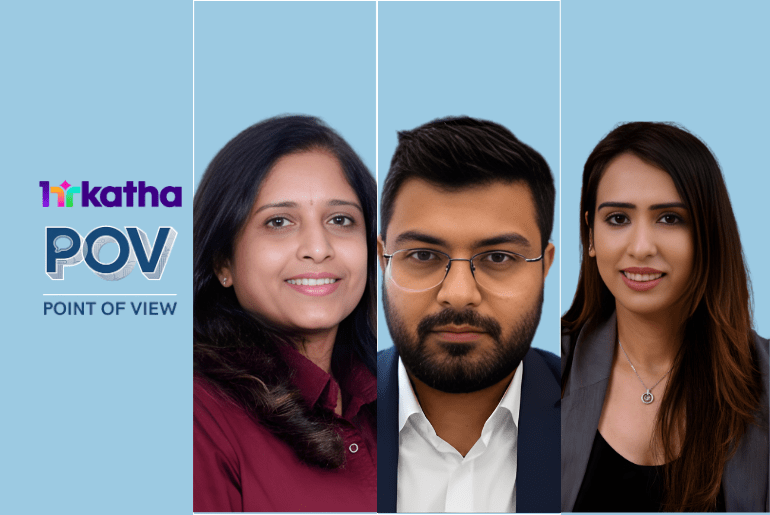
    Girija Kolagada, VP – APAC HRBP & India Country Leader, Progress Software

    Referral programmes work best when they are one channel, not the only channel.
    Employee referrals remain one of the fastest and most trusted ways to hire. People naturally recommend individuals they believe will succeed in the organisation.

    The challenge arises when organisations depend too heavily on referrals. Over time, this can narrow the talent pool by repeatedly drawing from similar networks instead of bringing in fresh perspectives.

    The answer is not to reduce referrals but to broaden sourcing. Referrals should sit alongside open job postings, community partnerships, campus outreach and employer branding initiatives. That combination creates a stronger and more balanced talent pipeline.
    Measurement also matters. Organisations should regularly analyse where candidates are coming from, how different sourcing channels perform and what hiring outcomes they produce over time. A more diverse pipeline often strengthens innovation, improves retention and reinforces trust that opportunities remain open to everyone.

    As recruitment becomes increasingly data-driven and AI-enabled, the objective should not simply be hiring faster but hiring better.
    Takeaway: Referrals add value when they complement diverse sourcing strategies rather than becoming the primary source of talent.

    Shishir Shandilya, CHRO, ConveGenius

    No. Bonuses don’t create insider networks. Culture does.
    I would challenge the question itself.
    The referral bonus is not the problem. Removing the incentive will not remove the networks that already exist.

    People naturally form communities based on shared experiences, educational backgrounds, previous employers or common interests. Those networks will continue whether referral bonuses exist or not. The real question is whether the organisation has built an inclusive culture that welcomes different perspectives.

    Referral programmes should remain one hiring channel rather than the only one. Every candidate, regardless of how they enter the organisation, should be assessed against the same standards, including their ability to contribute to an inclusive workplace.

    Organisations should reinforce what employees have in common, such as values, purpose and culture, while actively encouraging differences in thinking, experience and problem-solving. When that balance is achieved, referrals become a way of strengthening culture without limiting diversity.
    Takeaway: Don’t eliminate referral bonuses; build an inclusive culture where referrals support diversity rather than restrict it.

    Nimisha Dua, CHRO, Space Matrix

    Keep referral bonuses, but strengthen the hiring ecosystem around them.
    Employee referral programmes continue to be one of the most effective hiring channels because they are built on trust, accelerate hiring and bring in candidates who understand the organisation.

    The greater risk is not referrals themselves but the closed loops they can create when they become the dominant source of hiring. Organisations then stop discovering talent beyond existing networks, gradually reducing diversity of thought and organisational resilience.

    The solution is not to eliminate referral bonuses. It is to design a more balanced hiring ecosystem. Multiple sourcing channels, structured assessments and consistent evaluation standards ensure that how a candidate enters the process has no bearing on how they are assessed.

    Referral programmes represent employee advocacy and confidence in the organisation. That is worth preserving. What matters is ensuring that advocacy sits alongside fairness, equal access and rigorous hiring standards.

    Takeaway: The effectiveness of referral programmes should be measured not only by speed and cost, but also by their ability to strengthen the organisation without narrowing its talent pool.


    Employee Employee Referrals employer hiring channel Human Resources LEAD referral bonuses referrals talent Workforce
    Share. LinkedIn Twitter Facebook WhatsApp
    mm
    Navya Rajan
    • Website

    Leave A Reply Cancel Reply

    Related Posts

    From power stations to corporate HR: Panigrahi becomes ED – HR at NTPC

    October 2, 2026

    After Asia-wide roles, Kripa Krishnamoorthy takes charge of HR for Visa’s INSA market

    October 2, 2026

    BMW to cut 20% of senior management roles by 2027 as AI reshapes organisation

    October 1, 2026

    Google employees question Gemini 4’s real-world performance despite strong benchmarks

    October 1, 2026
    zoha
    Editorial

    GCCs are not shrinking, the jobs that made them are

    The numbers that describe India’s GCC story in 2026 are impressive. More than 2,100 centres.…

    The Tata tussle: why employees are distant but not indifferent

    In the space of five weeks, the chairman of one of India’s most storied conglomerates…

    EDITOR'S PICKS

    Case-in-Point: The employee who doesn’t want to become a manager

    October 1, 2026

    herSTORY: Sonal Jain, Global Chief HR & Transformation Officer, EPL

    October 1, 2026

    HR Perspectives by Sharad K. Sharma: “We focus on making people decisions with clarity and fairness”

    September 30, 2026

    20% of managers say AI is cutting their need for empathy. Just 12% see the opposite

    September 30, 2026
    Latest Post

    From power stations to corporate HR: Panigrahi becomes ED – HR at NTPC

    Movement October 2, 2026

    Surya Narayan Panigrahi has spent more than 36 years with one employer. He has hardly…

    After Asia-wide roles, Kripa Krishnamoorthy takes charge of HR for Visa’s INSA market

    Movement October 2, 2026

    Kripa Krishnamoorthy has spent much of her HR career moving between two worlds: running people…

    BMW to cut 20% of senior management roles by 2027 as AI reshapes organisation

    Brief News October 1, 2026

    German luxury carmaker BMW AG plans to eliminate around 20 per cent of its senior…

    Google employees question Gemini 4’s real-world performance despite strong benchmarks

    Brief News October 1, 2026

    Google is facing internal scepticism over the performance of its latest AI model, Gemini 4…

    Asia's No.1 HR Platform

    Facebook X (Twitter) Instagram LinkedIn WhatsApp Bluesky
    • Our Story
    • Partner with us
    • Career
    • Reach Us
    • Exclusive Features
    • Cover Story
    • Editorial
    • Dive into the Future of Work: Download HRForecast 2024 Now!
    © 2026 HRKatha.com
    • Disclaimer
    • Refunds & Cancellation Policy
    • Terms of Service

    Type above and press Enter to search. Press Esc to cancel.